It shows its work.
Every score sits on your own photo, zone by zone, so you can see where a number came from instead of taking one figure on trust.
One selfie. Your forehead and both cheeks, each scored for redness in your browser, with every number pinned to the place it came from.
Your overall result is free. The full report is $25 for 24 hours.
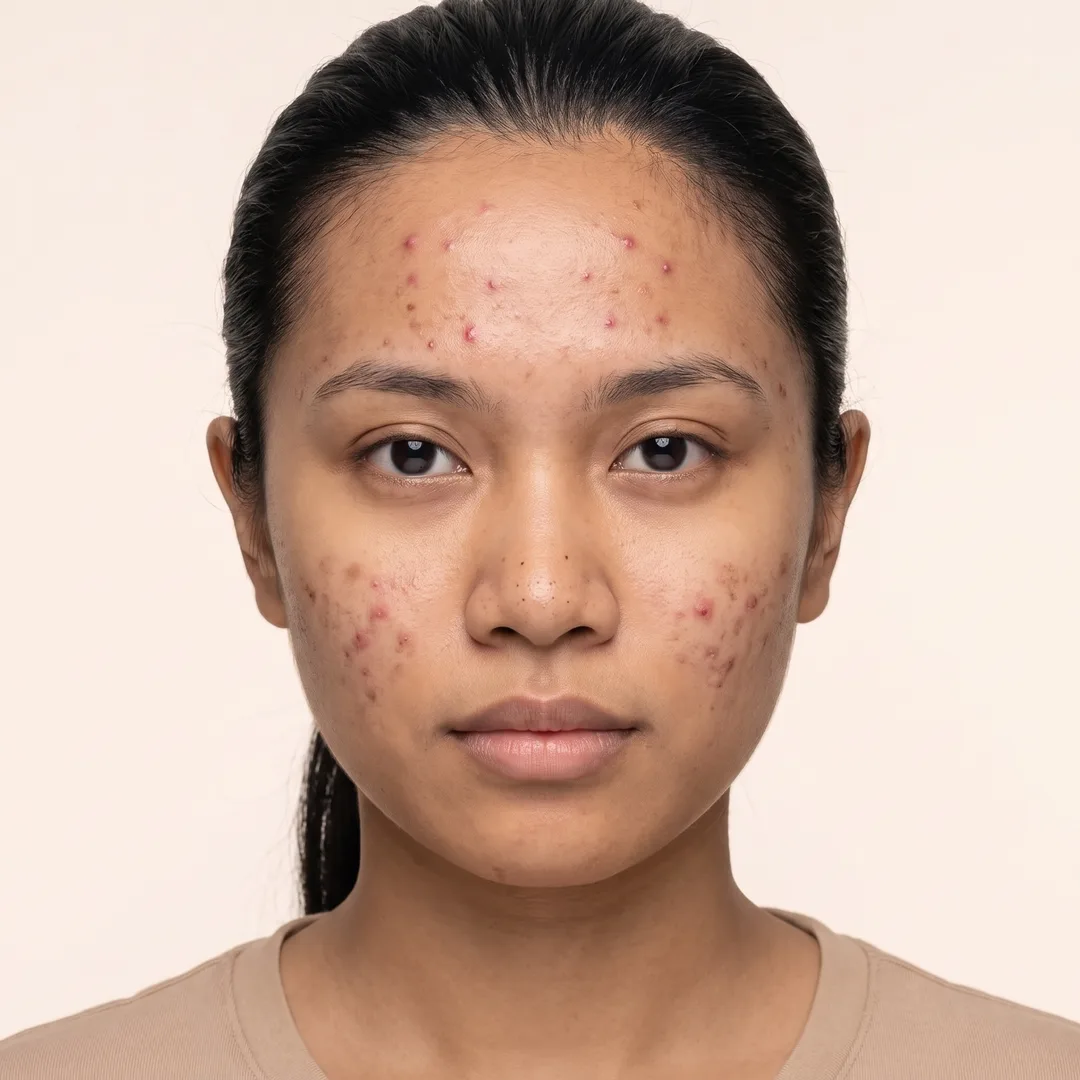
Unedited output from the Acne Analyser on a sample face, not a patient's photo. Forehead and cheeks are scored; nose, chin and jaw are not scored in this version.
3
zones scored on their own: forehead, left cheek and right cheek
5
lesion types it can name as the closest match, from red spots or a close-up of one spot
6
skin types to choose from by how your skin reacts to sun. Asked, never guessed from the photo
Seconds
to a result, worked out on your device
Face a window, pull your hair back and take one straight-on photo of bare skin, with no filters.
Your browser works out your overall level and score in seconds. It is free, and you do not need an account.
One payment opens the zone scores, closest-match lesion types, a treatment ladder and a routine for 24 hours.
Your overall level and score are free. The full report is everything underneath them.
Your forehead and both cheeks drawn on your own face and tinted by level, so you can see where each number comes from.
Forehead, left cheek and right cheek, each with its own score out of 100 and its level. Nose, chin and jaw are not scored in this version.
Where a zone shows redness, an image model looks at close crops of the inflamed spots it finds and names the closest of five types: blackheads, whiteheads, papules, pustules or cysts. Clear skin gets no label, and a match is never a diagnosis.
The care options in the 2024 American Academy of Dermatology acne guideline, grouped by how firmly the evidence supports each one, to discuss with a dermatologist.
Cleanse, treat, moisturise and protect, with the active ingredients to look for. If you tan easily or have darker skin, it adds care against the dark marks acne can leave. Ingredients, never brands.
Print the report or save it, and copy a short summary in a dermatologist's terms to bring to an appointment.
Save a scan to your account and compare each zone the next time you check.
Every score sits on your own photo, zone by zone, so you can see where a number came from instead of taking one figure on trust.
Your skin type is asked, never guessed from the photo. Tell us how your skin reacts to sun and your routine adds care against the dark marks acne can leave, which often bother people as much as the acne itself. And we say plainly where the analyser reads darker skin less well.
58.2%
of patients consulting a dermatologist for acne in an Asian Acne Board study had dark marks left by acne.
Abad-Casintahan et al., 2016. 324 patients across seven Asian countries. A figure for people who saw a dermatologist, not for everyone with acne.
Zone scores, closest-match lesion types and a treatment ladder set out in the terms of the 2024 American Academy of Dermatology guideline. It never claims an IGA, GAGS or Hayashi grade: those scales are built for a trained examiner, and GAGS also scores the chest and back.
Each card is the analyser's own result on a sample face, with nothing retouched. Forehead and cheeks are scored and tinted; nose, chin and jaw are not scored in this version.
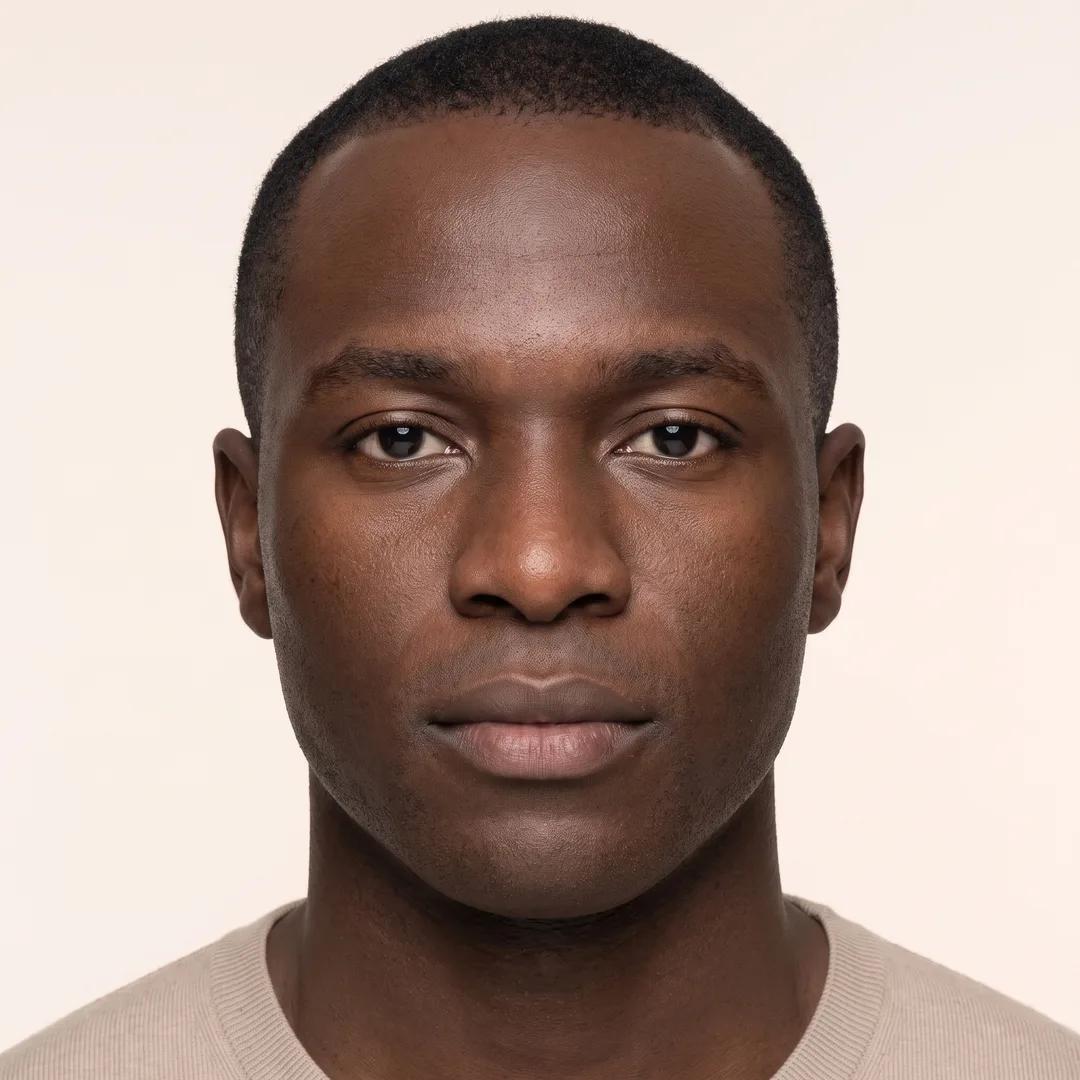
15/100
Sample face, not a patient. Unedited analyser output.
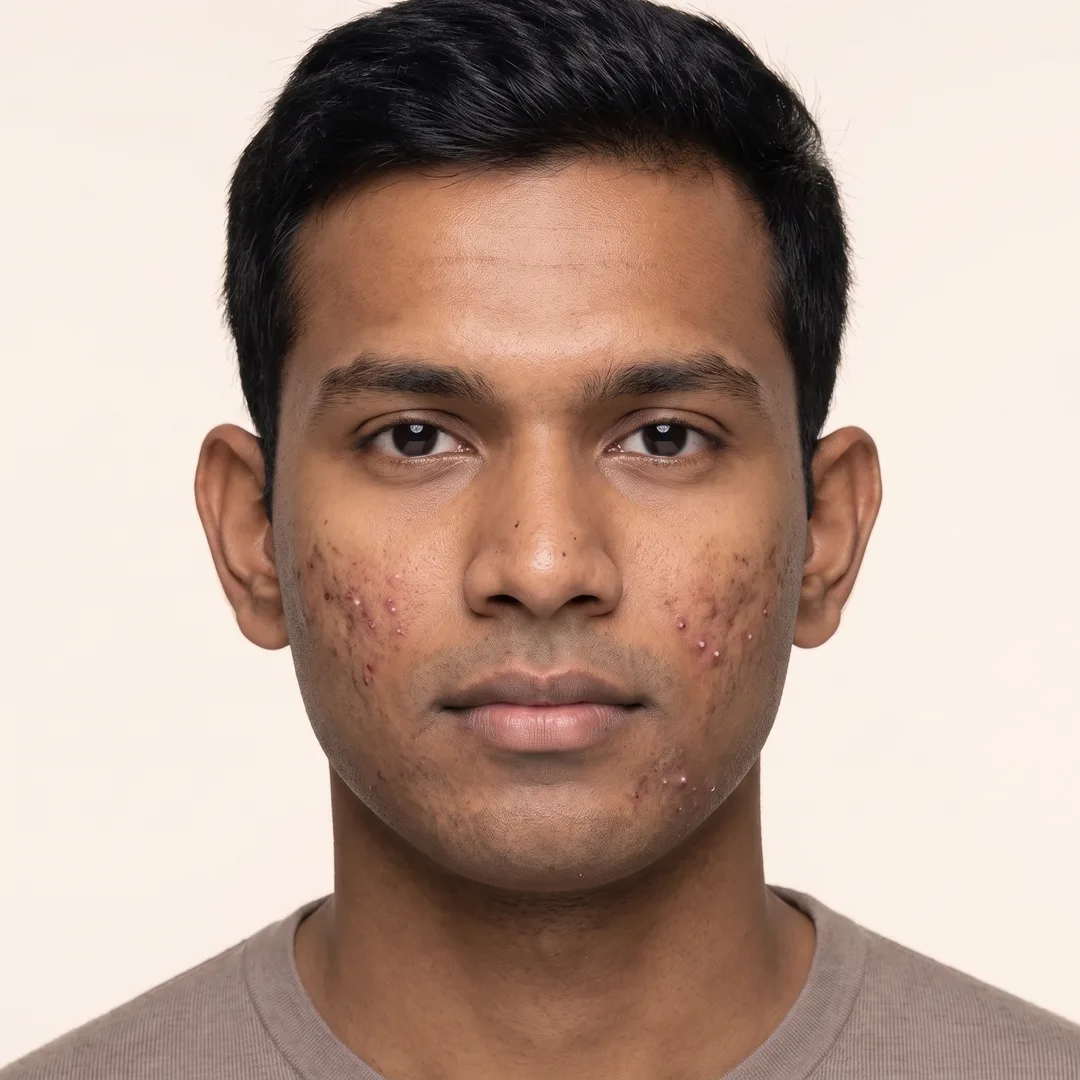
36/100
Sample face, not a patient. Unedited analyser output.
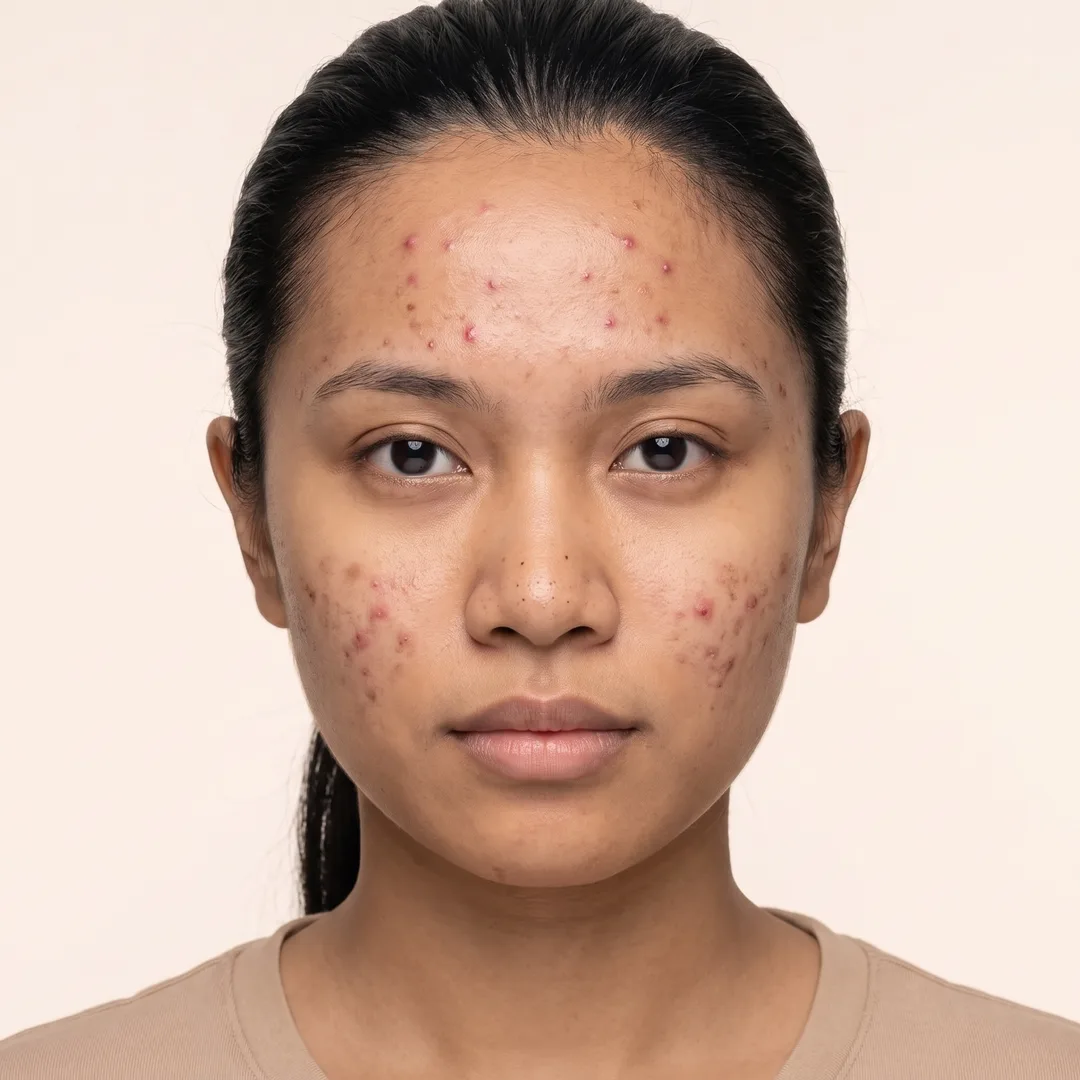
52/100
Sample face, not a patient. Unedited analyser output.
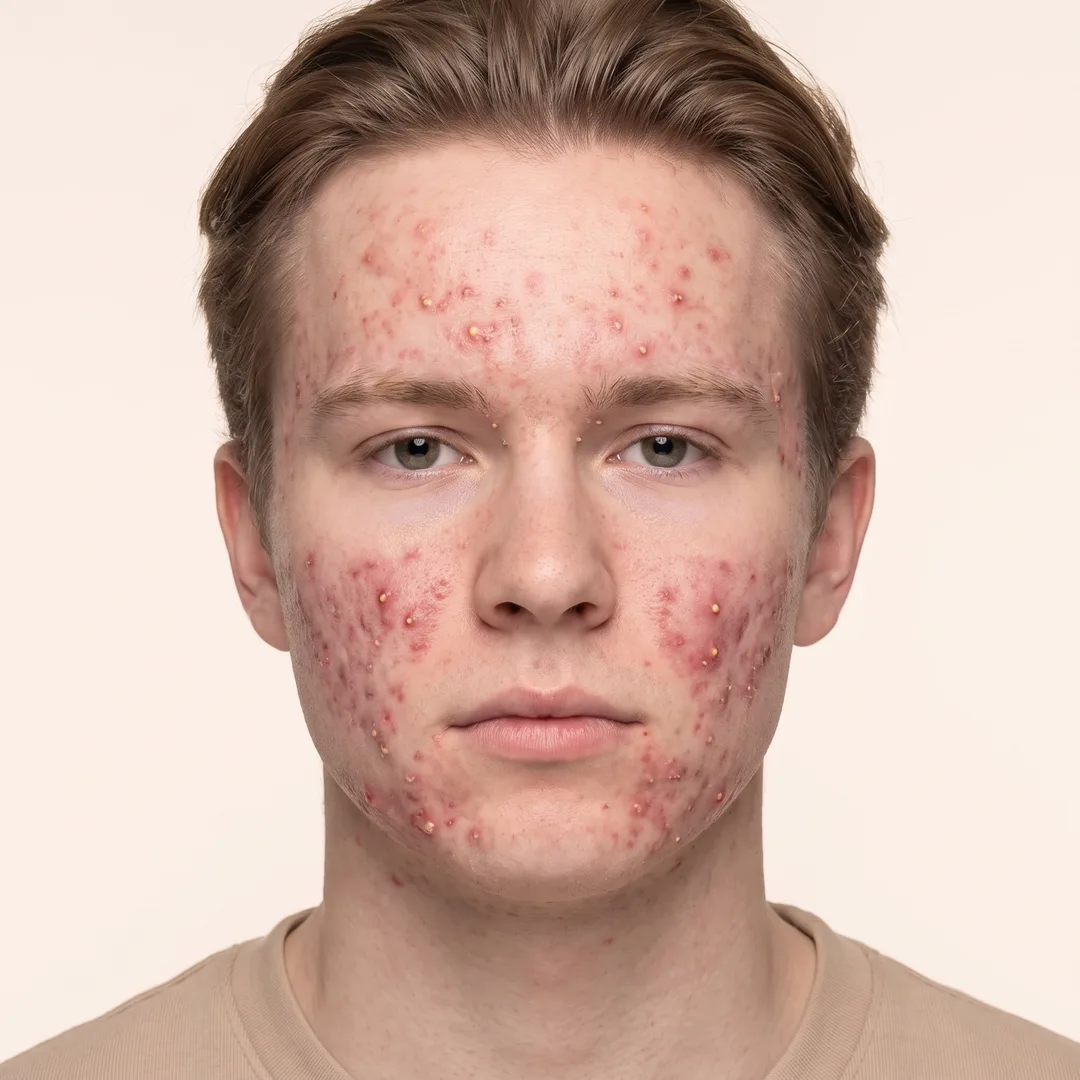
79/100
Sample face, not a patient. Unedited analyser output.
The darker the skin, the less contrast redness has in a photo, so acne on darker skin can read a level lower than it looks. If your skin is darker, treat a low result as a floor, not a verdict.
What the analyser does not see, with the studies behind the limits that have one.
The Acne Analyser is for cosmetic awareness. It is not a diagnosis and does not replace an examination by a dermatologist. If your acne is painful, leaving scars or getting worse, see one.
The analyser reads redness, so a face with only blackheads and whiteheads can read Clear. Photographs miss small, non-inflamed spots in general. These types are matched only from a close-up photo of a single spot. (Bae et al., 2024)
Stubble, lips and nostrils read as redness there, so this version leaves those zones out. Acne along the jawline does not change your result.
The marks old spots leave behind are not scored. Even dermatologists disagree on whether a mark is redness or a dark mark, most of all when active acne is present. (Goh et al., 2014)
Redness shows less contrast on darker skin, so the same acne can score a level lower. Research on software that grades acne from photos is also narrow: a 2025 review found most studies used photos of only a few ethnic groups. Read a low result on darker skin with extra caution. (Traini et al., 2025)
Nodules and cysts are judged partly by touch and depth, which no camera can supply. Treat a cyst match as a reason to see a dermatologist, not as a finding. (Bae et al., 2024)
The Acne Analyser has not been through a clinical study, so it makes no claim about how often it agrees with one. A dermatologist's examination remains the standard.
The analysis and your overall result cost nothing. If you want the detail zone by zone, one payment opens the full report for 24 hours.
$25for 24 hours of access
One payment. No subscription, nothing renews.
You see your overall result before you decide.